

Heavily scaled cast iron sewer lines are a serious concern for apartment buildings, mixed-use properties, and older commercial facilities throughout Orange County. Over time, mineral deposits, rust, grease, and debris shrink the usable interior diameter of a drain, causing recurring backups and slow drainage. Hydro jetting is a powerful, professional cleaning method that can restore flow in many scaled main sewer drains without immediately replacing the entire system. However, when a cracked section allows tree roots into the pipe—such as a main sewer run beneath a manager’s unit—cleaning is only part of the solution. This guide explains how to address four separate main drains, what hydro jetting and descaling can accomplish, and when excavation and pipe repair should be planned.
Hydro Jetting for Cast Iron Main Sewer Drains
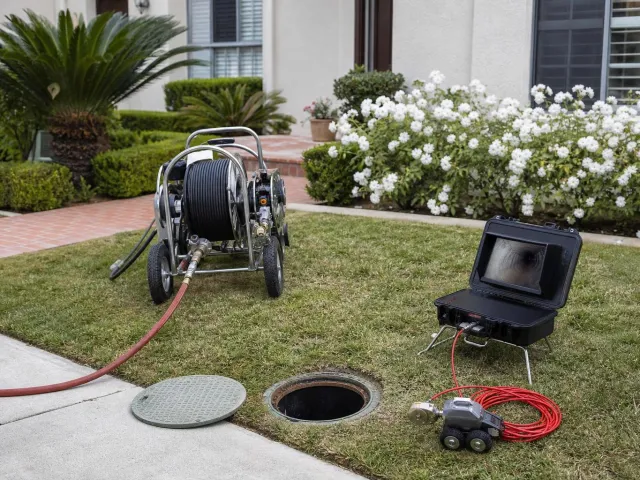
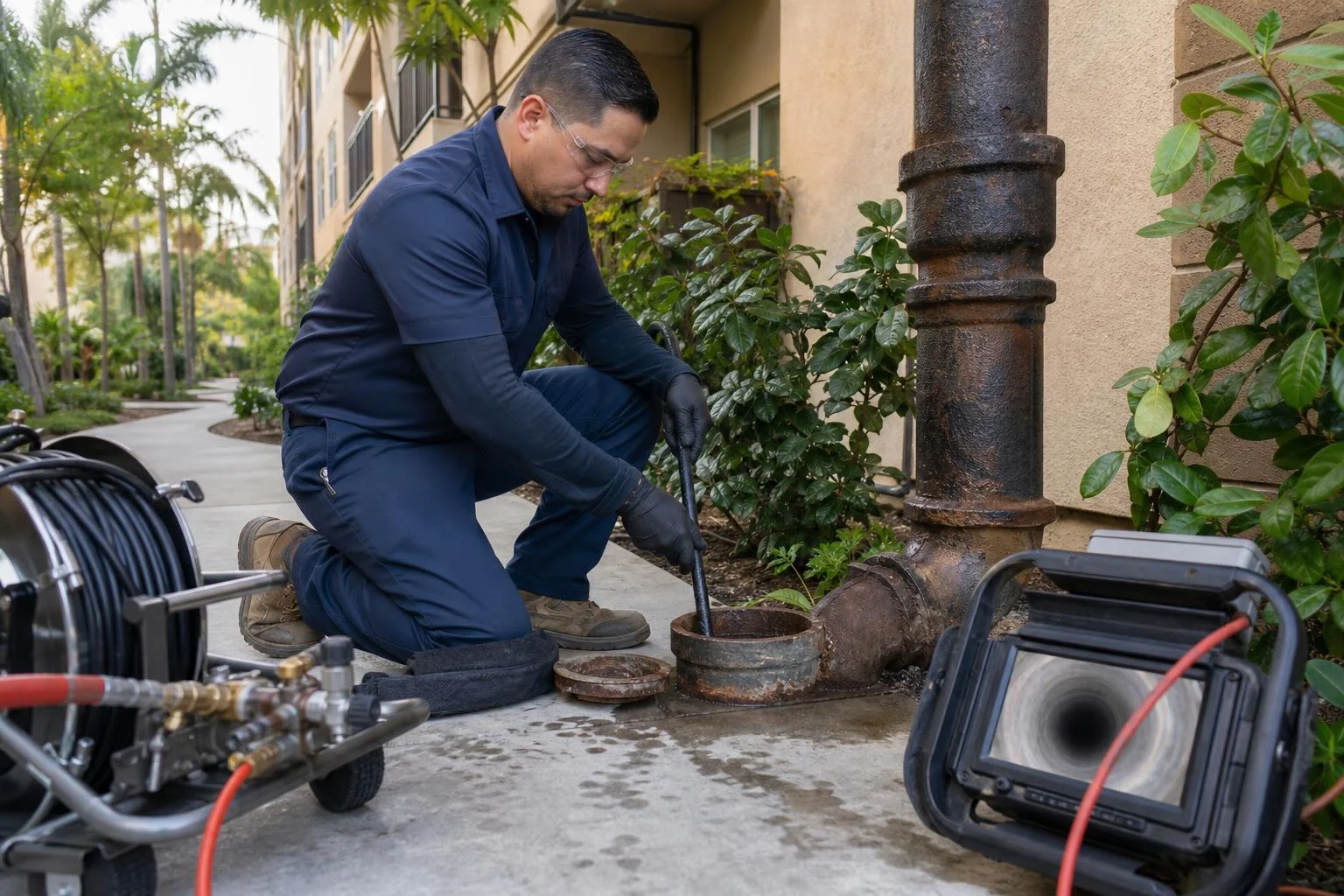
Hydro jetting uses a specialized hose and nozzle to send pressurized water through a sewer line. The water scours buildup from the pipe walls while pulling loosened debris downstream toward the sewer connection. For heavily scaled cast iron, a professional plumber may combine a camera inspection, mechanical descaling, and hydro jetting to remove as much obstruction as safely possible.
Cast iron was widely used in older Southern California buildings because it is durable, but it can deteriorate internally over decades. Corrosion creates rough surfaces that collect grease, soap residue, minerals, and solids. In multifamily properties in Laguna Hills, Irvine, Anaheim Hills, and nearby communities, several units may share or feed into main drains, so a restriction can quickly affect multiple tenants.
For a building with four separate main sewer drains, each drain should be evaluated independently. One line may be mostly affected by scale, while another may have root intrusion, offsets, cracks, or a collapsed section. Treating every drain as if it has the same condition can lead to incomplete cleaning and repeat service calls.
What a Professional Sewer Drain Assessment Should Include
- Drain camera inspection: Identifies scaling, cracks, roots, standing water, bellies, offsets, and other defects.
- Line locating: Helps determine the route and depth of the damaged sewer line before excavation is considered.
- Flow testing: Confirms whether water moves freely after cleaning and identifies remaining restrictions.
- Condition documentation: Provides property owners and managers with video findings and a clear repair plan.
- Access review: Determines whether cleanouts, roof vents, floor drains, or other access points can safely serve each main line.
Camera inspection is especially important before high-pressure cleaning older cast iron. Hydro jetting is highly effective when performed correctly, but fragile, severely deteriorated, or open pipe sections must be evaluated by an experienced plumber before selecting water pressure and nozzle type.
Descaling Heavily Scaled Cast Iron Pipes
Descaling is the process of removing hardened corrosion and mineral buildup from inside cast iron drain pipes. In Orange County, hard-water minerals and everyday wastewater can contribute to deposits over time. The goal is not simply to poke a hole through a blockage; it is to recover as much of the pipe’s internal flow area as the existing pipe condition allows.
Depending on the inspection results, the process may include mechanical chain descaling or other appropriate equipment followed by sewer hydro jetting. Mechanical tools can break up thick scale, while hydro jetting flushes loosened material from the system. A follow-up camera inspection is valuable because it shows whether the line has been adequately cleaned and whether damage was hidden beneath the buildup.
Common signs of scaled cast iron sewer pipes include:
- Recurring backups despite snaking or spot drain cleaning
- Multiple slow fixtures in the same building area
- Gurgling toilets, tubs, or floor drains
- Sewage odors near drains or cleanouts
- Frequent calls from tenants about drainage problems
- Drain camera footage showing rough, narrowed pipe walls
For commercial and multifamily buildings, proactive sewer maintenance can reduce emergency disruptions. Scheduling inspections and cleaning before peak occupancy periods is often easier and less expensive than responding to an after-hours sewage backup.
Root Intrusion From a Cracked Sewer Line Under Unit 3
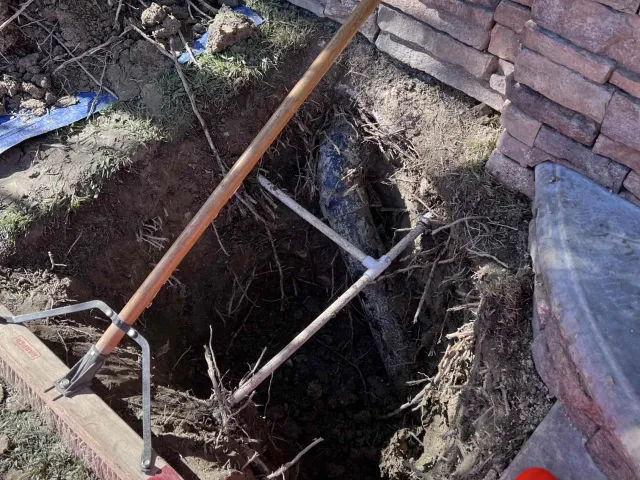
Tree roots naturally seek moisture and nutrients. Even a small crack, separated joint, or failed section in a sewer line can attract roots. Once roots enter, they can expand inside the pipe, catch toilet paper and waste, and create repeated blockages. In the scenario involving the main sewer drain beneath Unit 3, the manager’s unit, root intrusion indicates that the pipe has a structural defect—not just a cleaning issue.
Hydro jetting can remove roots and restore temporary flow, but it does not permanently seal a cracked sewer pipe. If the crack remains open, roots are likely to return. The appropriate long-term recommendation depends on camera findings, pipe depth, soil conditions, access, and the extent of deterioration.
When Sewer Excavation and Pipe Repair Are Necessary
Excavation may be necessary when the damaged section under Unit 3 cannot be reliably restored with a trenchless repair method or when the pipe is too broken, offset, or deteriorated for lining. A licensed plumbing team should locate the exact defect and create a targeted plan to minimize disruption to the unit and surrounding property.
A typical repair plan may include:
- Camera inspection and electronic locating of the cracked section.
- Temporary clearing of roots and debris to keep the drain operational when feasible.
- Evaluation of repair options, including spot repair, pipe lining, or excavation and replacement.
- Protection of flooring, landscaping, utilities, and occupied areas before work begins.
- Replacement of the failed pipe section with properly rated new piping and verification by camera.
For a line beneath an occupied unit, planning matters. Property managers should communicate anticipated access needs, possible temporary restroom limitations, and project timing to residents well in advance. Freedom Plumbing can help Orange County property owners understand the condition of each line and prioritize urgent repairs before a complete failure causes sewage damage.
Maintaining Four Separate Main Drains in a Multifamily Building
Buildings with four main sewer drain runs need a maintenance strategy that recognizes each line’s age, use, and condition. A single annual visit may be appropriate for one property, while another with older cast iron, mature landscaping, or heavy kitchen use may need more frequent review. There is no one-size-fits-all interval; camera findings and backup history should guide the schedule.
Property owners can help protect main sewer drains by following these practical steps:
- Keep accurate records of which units connect to each main drain.
- Schedule camera inspections after significant backups or recurring stoppages.
- Do not rely on chemical drain cleaners, which can be harsh on aging pipe and rarely solve root or scale problems.
- Educate tenants not to flush wipes, paper towels, hygiene products, or grease.
- Address root intrusion promptly rather than repeatedly paying for temporary clearing.
- Request before-and-after camera footage after major descaling or sewer cleaning work.
In older Orange County properties, proactive maintenance can also support budgeting. Once the condition of all four sewer lines is documented, owners can prioritize the cracked line beneath Unit 3 while scheduling cleaning or future replacement for the remaining drains based on actual risk.
Why Choose Freedom Plumbing for Orange County Sewer Service
Heavy scale, root intrusion, and cracked cast iron require more than a basic drain snake. Freedom Plumbing provides professional rooter services, drain cleaning, hydro jetting, sewer camera inspections, and pipe repair for residential, commercial, and multifamily properties across Orange County. Our team focuses on identifying the reason a sewer problem keeps returning, not merely restoring short-term flow.
Whether your property is in Laguna Hills, Irvine, Anaheim Hills, or a surrounding Southern California community, we can assess each main drain, explain the camera findings in clear terms, and recommend a practical path forward. From cleaning heavily scaled cast iron lines to planning a targeted excavation beneath an occupied unit, Freedom Plumbing helps property owners protect their buildings and reduce unexpected sewer emergencies.
Heavily scaled cast iron drains can often benefit from professional descaling and hydro jetting, but a cracked line with root intrusion requires a permanent repair plan. For a property with four separate main drains, camera inspection and line-by-line evaluation are essential to avoid missed defects and recurring backups. The damaged sewer section beneath Unit 3 should be located, cleared as needed, and evaluated for trenchless repair or excavation and replacement based on its structural condition. Do not wait for roots, corrosion, or a partial blockage to become a building-wide sewage emergency. Contact Freedom Plumbing today to schedule a professional sewer camera inspection, hydro jetting service, and repair consultation anywhere in Orange County.