

A kitchen drain leak can seem minor until moisture reaches a wall cavity, cabinet base, subfloor, or the unit below. In a condominium or apartment-style property, prompt leak detection is especially important when there is visible water damage downstairs, a potential mold concern inside the walls, or uncertainty about whether property management or the HOA has opened an insurance claim. Buildings constructed around 1950 may have aging drain materials, previous renovations, and hidden plumbing connections that make the source harder to identify. The right response is to stop additional water exposure, document conditions, locate the failure without unnecessary demolition, and coordinate repairs through the appropriate channels. Here is what Orange County property owners and residents should know.
Why Leak Detection Matters for a Kitchen Drain Leak
Leak detection is the process of identifying where water is escaping and determining the extent of moisture damage. With a kitchen drain, water may leak only when the sink is used, the dishwasher drains, or the garbage disposal runs. That intermittent behavior can allow a hidden problem to continue for days or weeks before anyone sees obvious signs.
In a multi-unit property, water follows gravity and can travel along framing, pipe penetrations, and utility openings. A leak originating beneath a kitchen sink in Laguna Hills, Irvine, Anaheim Hills, or elsewhere in Orange County may show up as a stain, bubbling paint, damp ceiling, or dripping fixture in the residence below. The visible damage is not always directly beneath the actual plumbing failure.
Common warning signs include:
- A musty or earthy odor near the kitchen cabinets or adjacent wall
- Swollen cabinet flooring, warped baseboards, or loose flooring
- Staining, peeling paint, or soft drywall in the kitchen or downstairs unit
- Water appearing only after the sink, dishwasher, or disposal is used
- Slow drains, gurgling, or recurring clogs that may point to a compromised drain line
- An unexplained increase in water use, although drain leaks do not always affect the water meter
According to the Environmental Protection Agency, household leaks can waste nearly 1 trillion gallons of water nationwide each year. While a drain leak may not create constant water loss like a pressurized supply-line leak, it can still cause significant building damage whenever the fixture is used.
Potential Mold in Walls: What to Do First
Potential mold inside walls should be taken seriously, but it should not be assumed without an inspection. Mold growth requires moisture, a food source, and time. Drywall paper, wood framing, cabinet materials, and dust can all support growth if a kitchen drain leak keeps materials damp. In Southern California, people may underestimate indoor moisture risks because the outdoor climate is often dry; however, a concealed plumbing leak creates its own humid environment inside a wall or ceiling cavity.
The first priority is preventing further water intrusion. If the leak appears connected to the kitchen drain, avoid using the affected sink, dishwasher, or garbage disposal until a qualified plumber evaluates it. Place a container beneath an accessible leak only if it can be done safely, and remove stored items from wet cabinetry.
Immediate steps for residents and property owners
- Document the condition. Take dated photos and videos of wet cabinets, stains, damaged finishes, and any damage reported in the unit below.
- Notify management in writing. Provide a concise description of when the leak was first noticed, when the kitchen fixtures were used, and what damage is visible.
- Request professional inspection. A plumber can identify the source, while a qualified water-damage or mold professional can assess affected materials when warranted.
- Dry affected areas promptly. Rapid drying is important. Do not simply paint over stains or seal damp drywall.
- Keep records. Save inspection findings, invoices, photos, written notices, and communications with management, the HOA, and insurers.
Freedom Plumbing can perform focused drain leak diagnostics and explain whether the failure appears to be at a fixture connection, branch drain, shared line, or another accessible plumbing component. A written plumbing assessment can help owners and managers make informed next steps.
Older 1950 Construction and Hidden Drain Pipe Problems
A property built in 1950 may have a mix of original and replacement plumbing. Over decades, kitchens are often remodeled, drain routing may be altered, and different pipe materials may be joined together. This can create weak points that are not visible from inside the kitchen.
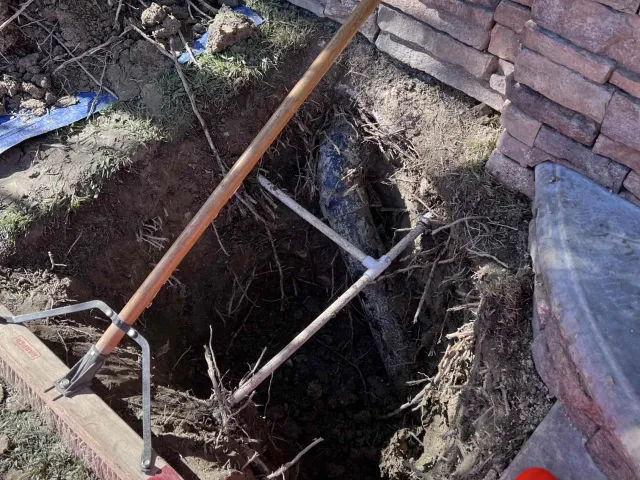
Older Orange County buildings may contain aging cast iron, galvanized components, copper, ABS, PVC, or transitions between materials. Cast-iron drain lines can corrode internally and develop cracks, while old fittings may loosen and seals can deteriorate. A prior remodel may also conceal drain piping behind finishes without providing easy access for future repairs.
Common kitchen drain leak sources in older condos
- Loose or deteriorated P-trap, disposal, dishwasher, or sink-tailpiece connections
- Cracked drain fittings hidden inside cabinetry or walls
- Corroded cast-iron drain pipe or failed joints
- Drain blockages that cause wastewater to back up through a weak connection
- Improperly sloped or poorly supported drain lines from a past renovation
- Leaks around shared stacks or pipes serving multiple units
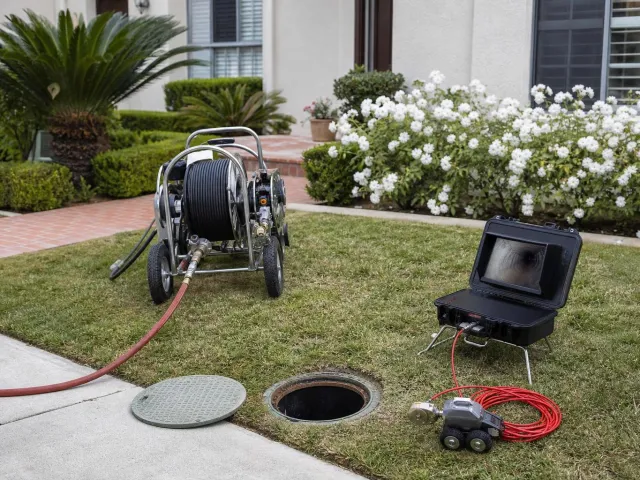
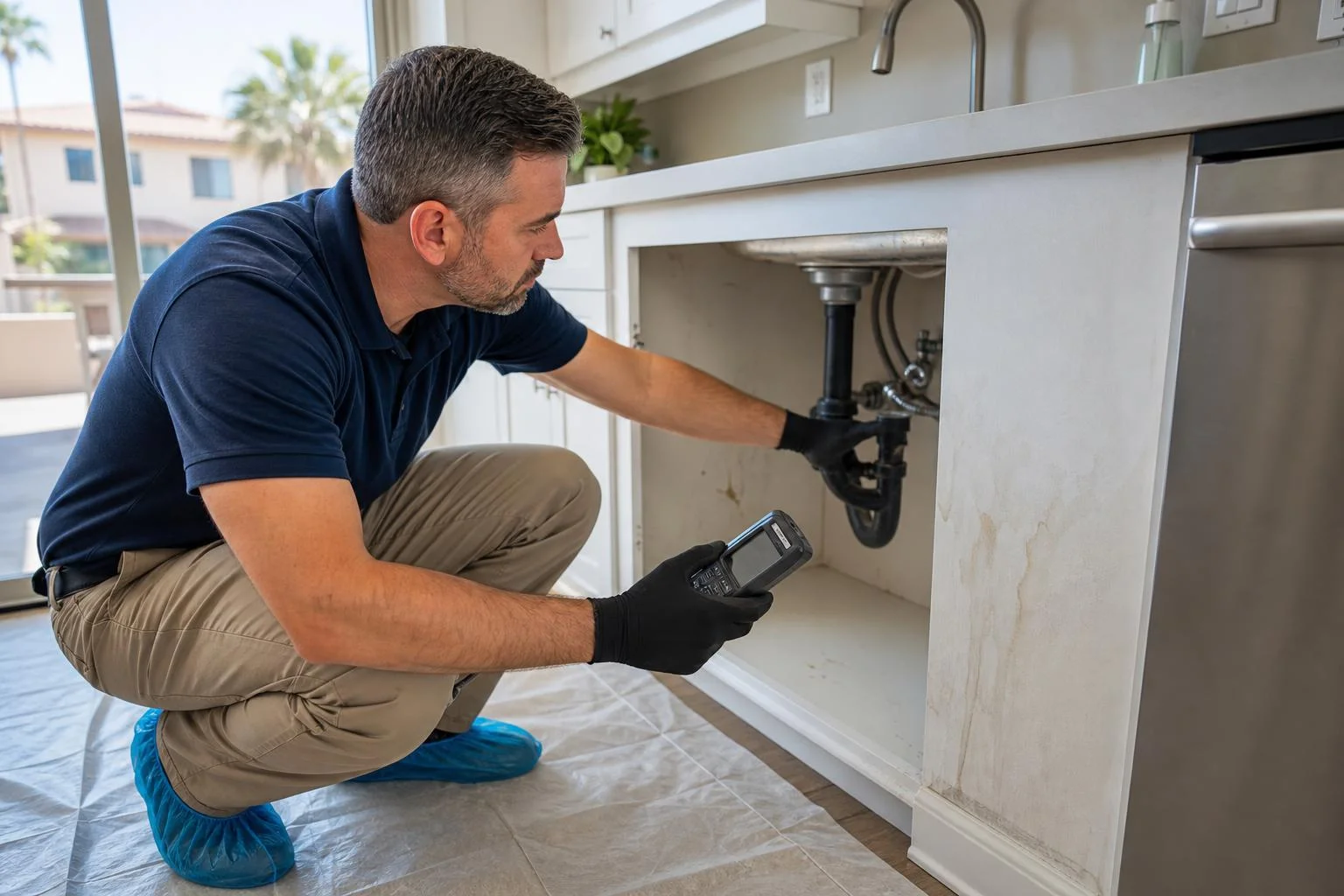
Professional leak detection may include visual plumbing inspection, moisture readings, drain testing, camera inspection, and targeted access recommendations. The goal is to locate the source as accurately as possible before opening walls, cabinets, or ceilings. For a suspected damaged kitchen drain line, camera inspection and rooter service can also reveal internal corrosion, buildup, breaks, or obstructions that contribute to recurring leakage.
HOA Claims, Unit-Below Damage, and Repair Documentation
When damage affects a unit below, communication and documentation matter. Whether an HOA, property manager, individual owner, or insurer is responsible for particular repairs depends on the governing documents, insurance policies, the plumbing location, and the cause of loss. If management has not filed an HOA claim, that does not mean the active leak should wait for repair.
Start by reporting the issue through the property’s required maintenance or emergency process. Ask management for written confirmation that the report was received and request guidance on access, approved vendors, and the association’s next steps. Owners should also review their own condominium insurance policy and contact their carrier or insurance professional for claim-specific guidance. This is practical information, not legal or insurance advice.
A useful incident record should include:
- Date and time the kitchen drain leak was discovered
- Which fixtures were operating when water appeared
- Photos of the source area and affected unit below
- Plumber findings on the pipe location and likely cause
- Moisture-detection or remediation reports, if performed
- Communications with the HOA, management, neighbors, and insurance representatives
Do not delay emergency plumbing work merely to wait for a claim decision when water is actively damaging the building. Stopping the leak and limiting moisture spread can reduce the scope of restoration. After the plumbing source is corrected, qualified restoration professionals can determine whether drying equipment, material removal, or further mold assessment is appropriate.
How Freedom Plumbing Handles Orange County Drain Leaks
Freedom Plumbing provides practical plumbing support for homeowners, landlords, property managers, and commercial properties throughout Orange County. For a kitchen drain leak with possible wall moisture or downstairs damage, our team starts with a careful evaluation of accessible plumbing and the fixture-use conditions that trigger the leak. We can then recommend the least disruptive repair approach supported by the findings.
Depending on the issue, service may involve drain cleaning, rooter service, camera inspection, replacement of damaged fittings, pipe repair, or coordination around access to the affected area. Our plumbers understand that condo and multi-unit plumbing problems require clear communication, especially when residents, managers, and downstairs neighbors need accurate information quickly.
For residents in Laguna Hills, Irvine, Anaheim Hills, Mission Viejo, Newport Beach, and surrounding Southern California communities, early action can help protect cabinets, walls, ceilings, and neighboring units from further damage.
Schedule Leak Detection Before Moisture Damage Spreads
A suspected kitchen drain leak should never be ignored simply because the water appears only occasionally. In an older 1950-era building, hidden pipe deterioration, failed joints, or remodeling-related drain issues can allow moisture to travel beyond the kitchen and affect a unit below. Fast leak detection, documented findings, and timely pipe repair are the best way to limit additional damage and address potential mold conditions responsibly. Notify property management, preserve photos and records, and avoid using the affected fixture until it has been evaluated. If you need dependable kitchen drain leak service in Orange County, contact Freedom Plumbing today to schedule an inspection, drain diagnosis, or emergency plumbing repair.