

A shower that swings from hot to cold, drips after shutoff, or has weak pressure often points to a worn shower cartridge. At the same time, commercial-style or electronically controlled toilets can develop incomplete flushes when inline filters clog, water flow is inadequate, or a flush solenoid and pressure sensor are not operating correctly. These problems can be especially frustrating for Orange County homes and businesses, where hard water mineral scale can affect moving plumbing parts. This guide explains the warning signs, safe troubleshooting steps, and when professional shower cartridge replacement or toilet flush repair is the best solution. Dymek’s Freedom Plumbing helps property owners in Laguna Hills, Irvine, Anaheim Hills, and nearby communities restore reliable water flow without guesswork.
Shower Cartridge Replacement: Signs It Is Time
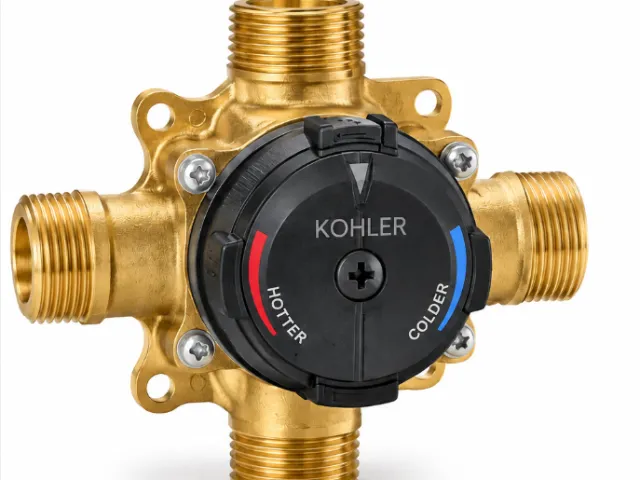
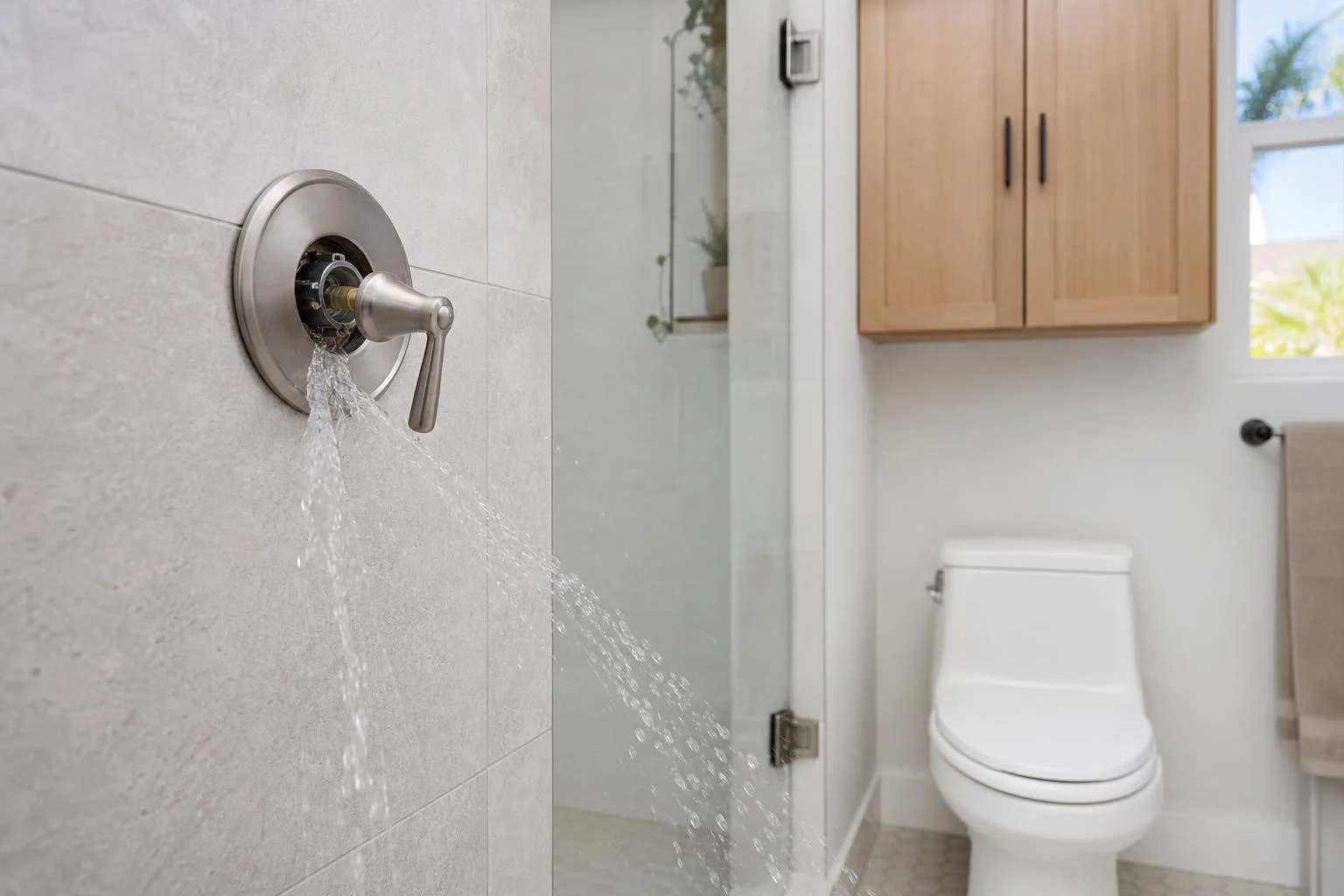
A shower cartridge is the valve component behind the handle that mixes hot and cold water and controls flow. Over time, sediment, mineral deposits, worn seals, and internal damage can prevent it from moving or sealing properly. In Southern California, hard water can accelerate mineral buildup around cartridges, showerheads, and valves.
Common signs that you may need shower cartridge replacement include:
- Water dripping or running from the showerhead after the handle is off
- Sudden temperature changes while showering
- Little or no hot water at one shower when other fixtures have hot water
- A stiff, loose, or difficult-to-turn shower handle
- Reduced shower flow despite a clean showerhead
- Water leaking behind the wall or around the handle trim
Before replacing a cartridge, a plumber should confirm the issue is isolated to the shower valve. For example, low pressure throughout the home may be caused by a pressure-reducing valve (PRV), a partially closed shutoff valve, a failing regulator, or supply-side restrictions—not the cartridge itself. Replacing the wrong part can add cost without correcting the problem.
Why Professional Shower Valve Service Matters
Cartridges are not universal. The correct replacement depends on the valve manufacturer, model, and configuration. Removing an old cartridge can also be difficult when it is seized by scale. Excess force may damage the valve body inside the wall, potentially turning a straightforward repair into a larger wall-access and pipe repair project.
Freedom Plumbing can identify the valve, inspect its condition, replace compatible components, and test temperature balance and flow after service. This is particularly important for anti-scald valves, which are designed to limit sudden temperature spikes and protect household members and guests.
Inline Toilet Filters and Low-Flow Flush Problems
Many toilets with electronic flush controls, pressure-assisted components, or specialized fill systems use an inline filter or screen to protect internal parts from debris. When this filter becomes blocked by sediment, scale, or aging supply-line debris, the toilet may flush weakly, refill slowly, or fail to complete a flush cycle.
For systems that require strong incoming flow, a practical field benchmark is often at least 6 gallons per minute, or roughly 1 gallon every 10 seconds. However, this is not a universal requirement for every toilet. Always follow the fixture manufacturer’s specifications, because flow and pressure requirements vary by model.
To assess a suspected restriction, a qualified plumber may:
- Shut off the local water supply and inspect the supply stop and line.
- Check the inline filter or inlet screen for sediment and mineral scale.
- Clean or replace approved filter components rather than forcing debris deeper into the valve.
- Measure available flow and confirm the toilet is receiving sufficient water.
- Inspect the fill valve, diaphragm, and flush assembly for wear.
For restaurants, offices, retail spaces, and multifamily properties in Orange County, a slow-flushing toilet can quickly become a sanitation and customer-service concern. Prompt toilet repair helps reduce restroom downtime and avoids repeated overflow risks caused by incomplete waste removal.
Flush Solenoid Troubleshooting for Electronic Toilets
A flush solenoid is an electrically controlled component that opens or triggers the flush mechanism. When it fails, the toilet may not flush at all, may flush intermittently, or may continue cycling unexpectedly. The source of the problem may be the solenoid itself, wiring, a control board, the sensor, inadequate water supply, or debris in the valve.
Signs of a possible flush solenoid issue include:
- No flush response when the button or sensor is activated
- Intermittent flushing that worsens during busy periods
- A clicking sound without a full flush
- Repeated flushing or a valve that will not close properly
- Indicator lights or diagnostic alerts on the control module
Do not assume an electronic component is defective before verifying water flow, filter condition, battery or power supply, wire connections, and manufacturer diagnostics. On many systems, a restricted inlet filter can mimic a bad solenoid because the valve activates but cannot receive enough water to perform correctly.
Water Pressure Sensor Diagnostics and Orange Warning Lights
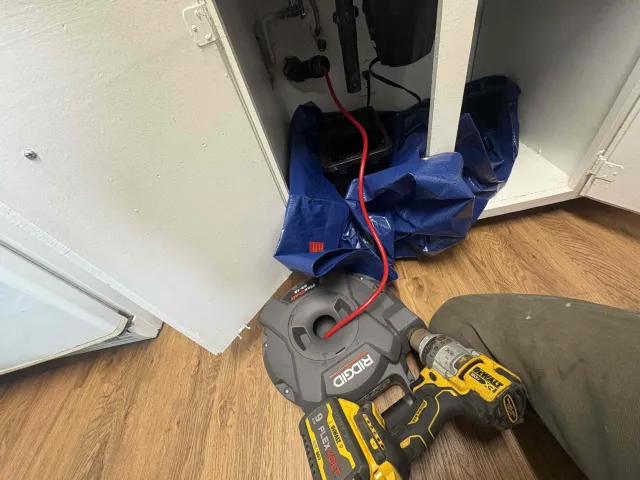
Some electronic toilet systems have a water pressure sensor connected to the main control board. A warning light—such as an orange light near a red plug on a specific board design—may indicate a sensor, communication, power, or pressure-related fault. The exact meaning depends on the manufacturer and model, so the unit’s service manual is the controlling reference.
Temporarily disconnecting a water pressure sensor and testing the flush may be a diagnostic step on certain systems, but it should only be performed by a trained technician following the manufacturer’s instructions. Do not leave a sensor unplugged or bypass a safety/control device as a permanent repair. Doing so can create unreliable operation, conceal the actual issue, or damage equipment. A proper diagnosis compares the system’s sensor reading with actual incoming pressure and flow, then repairs the underlying restriction, wiring fault, sensor issue, or control-board problem.
Check PRV Pressure and Incoming PSI to the Home
If multiple fixtures have low flow, inconsistent performance, or trouble operating solenoid-controlled equipment, check the incoming water pressure at the home or building. The PRV, also called a pressure regulator, is installed to reduce municipal supply pressure to a safe, usable range. A failing or improperly adjusted PRV can cause low pressure, high pressure, pressure fluctuations, pipe noise, and poor fixture performance.
Many residential plumbing systems are commonly adjusted within a range of about 40 to 80 PSI, but the appropriate target depends on the property, local conditions, fixture requirements, and plumbing configuration. Pressure above 80 PSI is generally considered excessive and may require correction to protect pipes and appliances. Raising PRV pressure without measuring the system can worsen leaks, strain water heaters, and damage valves.
A professional plumbing inspection should include:
- Static and flowing PSI readings at the main supply
- Pressure changes when showers, faucets, and toilets operate
- PRV condition and adjustment verification
- Inspection for partially closed main or fixture shutoff valves
- Flow testing where specialized toilets require a minimum supply rate
- Evaluation of scale, corrosion, or pipe restrictions in older plumbing
In communities such as Laguna Hills, Irvine, Mission Viejo, and Anaheim Hills, mineral content and aging fixture components can contribute to restrictions that are not obvious from a quick visual inspection. Accurate testing helps distinguish a local fixture issue from a whole-home water pressure problem.
When to Call an Orange County Plumber
Simple showerhead cleaning may be appropriate for a homeowner, but cartridge replacement, electronic flush controls, and PRV adjustments require the right parts, testing tools, and experience. Call a plumber when a shower leaks behind the wall, water temperature becomes unpredictable, a toilet repeatedly fails to flush, an electronic control displays a warning light, or water pressure changes throughout the property.
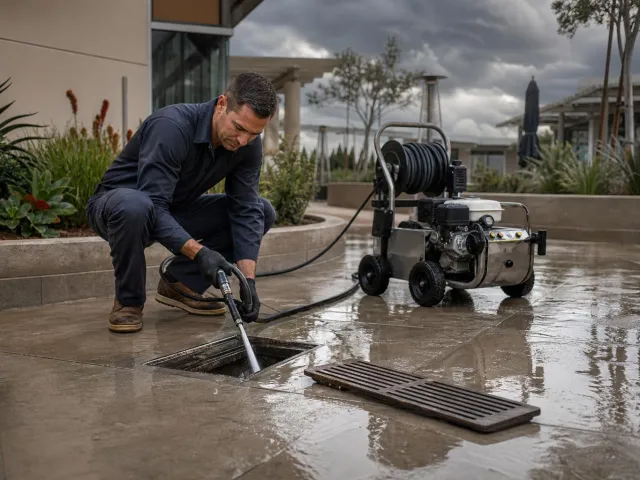
Dymek’s Freedom Plumbing provides targeted drain, rooter, pipe repair, toilet repair, and shower cartridge replacement services for residential and commercial customers. We focus on identifying the actual cause—whether it is an inline filter, flush solenoid, pressure sensor, PRV, or worn valve cartridge—so you receive a repair that supports reliable long-term performance.
Do not let a weak shower, unreliable toilet, or questionable water pressure turn into a larger plumbing disruption. Contact Dymek’s Freedom Plumbing for professional troubleshooting and repair in Orange County. Our experienced team can inspect your shower valve, test toilet flow and controls, evaluate incoming PSI, and recommend the right solution for your home or business in Laguna Hills, Irvine, Anaheim Hills, or surrounding Southern California communities.