

A tankless water heater error code 12 typically means the unit attempted to ignite but could not confirm a stable flame. Even on a tankless water heater that is only three years old and receives annual maintenance, this flame-failure alert can occur because of interrupted gas supply, a contaminated flame sensor, restricted burner ports, venting problems, or an electrical connection issue. For homeowners and businesses in Orange County, an error code 12 deserves prompt attention: repeated ignition attempts can leave you without hot water and may point to a gas-combustion condition that should be professionally evaluated. Below, Freedom Plumbing explains what to check safely, why maintenance does not eliminate every cause, and when to call a licensed plumber.
What Does Tankless Water Heater Error Code 12 Mean?
On many popular gas tankless water heater models, tankless water heater error code 12 indicates flame failure or flame loss. In simple terms, the system opened the gas valve and initiated ignition, but the control board did not detect a reliable burner flame. The unit shuts down as a safety measure rather than continuing to release gas without proper combustion.
Always consult the manual for your exact make and model, since error-code definitions can vary slightly among manufacturers. However, code 12 commonly directs attention to the ignition, gas, burner, flame-sensing, and venting systems.
Common symptoms include:
- Hot water starts briefly, then turns cold.
- The unit clicks or attempts ignition several times before stopping.
- Error code 12 returns after the heater is reset.
- Appliances such as a gas range or furnace also appear weak or unreliable.
- You notice unusual burner noise, soot, or a combustion-related odor.
If you smell gas, hear hissing near a gas line, or suspect a gas leak, do not reset the heater. Leave the area, avoid switches and open flames, and contact the gas utility or emergency services from a safe location.
Gas Pressure Issues That Cause Flame Failure
Insufficient or unstable gas pressure is one of the most important potential causes of a flame-failure code. A tankless system needs enough correctly sized gas flow to ignite and sustain its burners, especially when it is producing hot water at a high flow rate. A unit may appear to work during a low-demand sink use but fail when multiple showers, a dishwasher, and laundry are running.
In Orange County homes, gas-supply concerns can arise after remodeling, adding a larger tankless water heater, installing a gas dryer or range, or converting appliances. An older or undersized gas line may not deliver the volume required when several gas appliances operate at once. The issue can also be related to a partially closed gas shutoff valve, a failing regulator, meter concerns, or an incorrect natural-gas/propane configuration.
Safe gas-supply checks homeowners can make
Without disconnecting gas piping or removing sealed combustion components, you can perform a few basic observations:
- Confirm the heater’s manual gas shutoff valve is fully open; the handle is generally parallel to the pipe when open.
- Check whether other gas appliances are working normally. Weak range flames or furnace ignition problems may suggest a broader supply issue.
- Consider when the error occurs. If it appears only during high hot-water demand, gas-line sizing or pressure may be a factor.
- Verify that no recent renovation, appliance addition, or utility work coincided with the problem.
Actual gas-pressure testing requires a calibrated manometer and knowledge of manufacturer specifications. It should be completed by a qualified plumbing or gas professional. Do not attempt to adjust a gas regulator or alter the gas valve yourself. Freedom Plumbing can evaluate the gas supply, appliance demand, piping capacity, and combustion operation for homes from Laguna Hills and Irvine to Anaheim Hills and surrounding Orange County communities.
Dirty Flame Sensor and Blocked Burner Problems
Annual flushing is valuable maintenance, but it primarily addresses mineral scale in the heat exchanger. It does not always prevent dust, lint, insect debris, oxidation, or airborne contaminants from affecting the burner assembly and flame-sensing system. That is why a relatively new unit can still display a tankless water heater error code 12.
The flame sensor confirms that burners have ignited. If its surface is dirty, if its wire connection is loose, or if the flame pattern does not properly reach the sensor, the control board may interpret the situation as no flame and shut the heater down. Likewise, restricted burner ports can create uneven ignition or weak flames that fail the safety check.
Why burner contamination happens in Southern California
Tankless water heaters installed in garages, utility rooms, exterior enclosures, or near laundry areas can be exposed to debris. Orange County’s dry, dusty periods can contribute to buildup, while coastal moisture may accelerate corrosion on certain components. Construction dust from nearby renovations, pet hair, dryer lint, and insects can also interfere with air intake screens and burner performance.
Warning signs of burner or flame-sensor trouble include repeated ignition failures, delayed ignition, popping sounds, yellow or irregular flames where visible through an approved viewing port, soot, or an error that clears temporarily after a reset. Because cleaning burners incorrectly can damage components, change combustion characteristics, or create a safety hazard, professional service is the best solution.
- Ask for inspection and cleaning of the flame sensor and ignition components.
- Have burner ports and the combustion chamber assessed for debris or corrosion.
- Request inspection of wiring harnesses, grounding, and control-board connections.
- Ensure the air intake and exhaust pathways are clear and properly installed.
Venting, Airflow, and Condensate Checks for Tankless Heaters
Proper combustion requires both fuel and air. A blocked intake, obstructed exhaust termination, damaged vent pipe, or issue with a condensate drain can contribute to flame instability. This is particularly relevant for high-efficiency condensing tankless water heaters, which produce condensate during normal operation.
From the ground, homeowners can visually inspect the exterior termination for leaves, nesting material, dirt, or obvious damage. Keep shrubs and stored items away from outdoor vents and do not cover a tankless unit to protect it from weather unless the manufacturer specifically approves the enclosure. Never insert tools, hoses, or chemicals into vent piping.
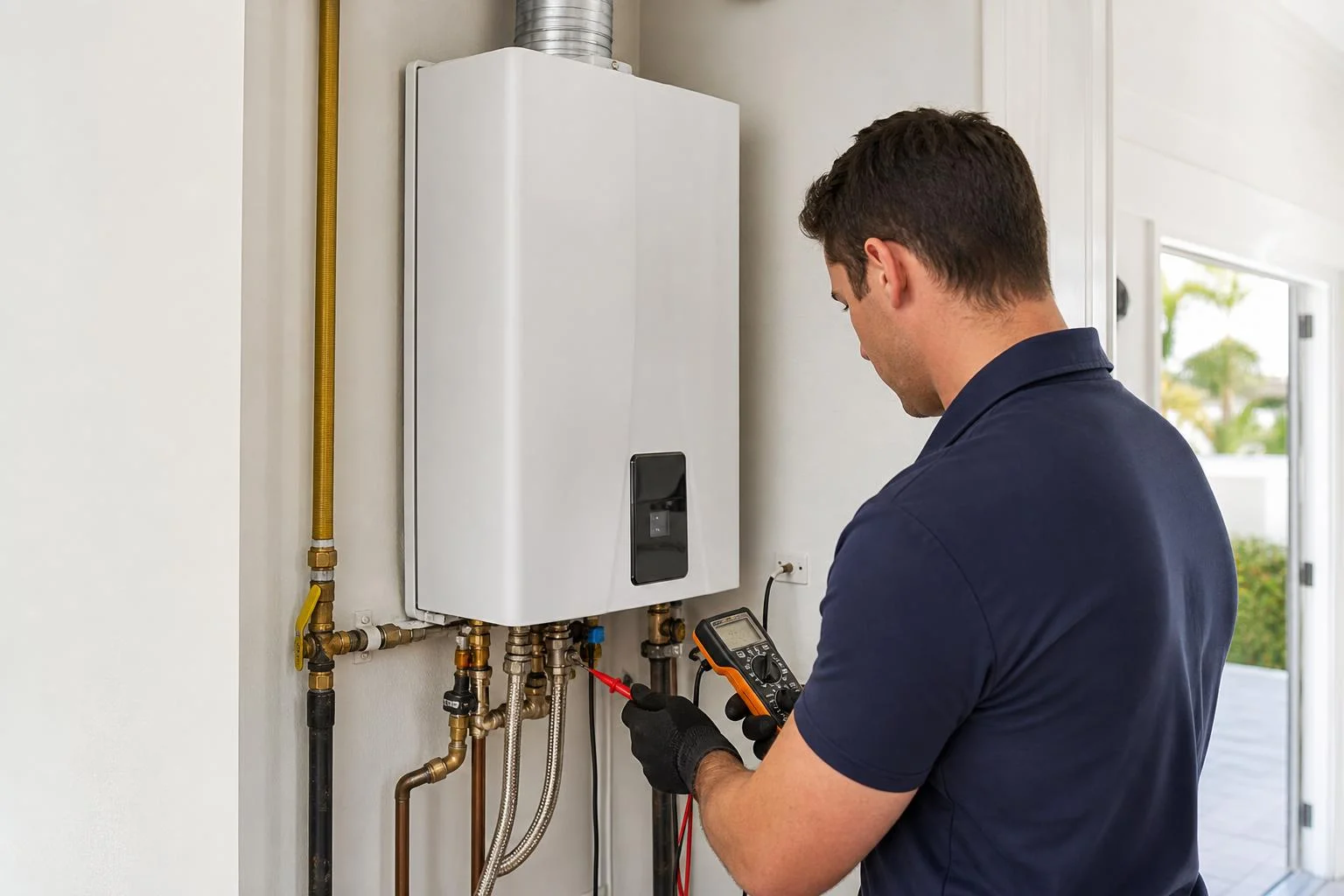
A professional tankless water heater repair visit should include verification of vent sizing, slope, connections, intake airflow, exhaust condition, condensate drainage, and combustion performance. These details are essential for reliable operation and for protecting indoor air quality.
What to Do Before Calling for Tankless Water Heater Repair
If there is no gas smell or immediate safety concern, a single controlled reset may be reasonable. Turn off hot-water demand, follow your manufacturer’s reset instructions, and observe whether the code returns. Avoid repeatedly resetting the unit; doing so can mask a recurring fault and does not fix its source.
To help your plumber diagnose the problem quickly, make note of:
- The exact brand, model, and serial number.
- Whether code 12 occurs at every fixture or only during heavy demand.
- Other active error codes or changes in unit sounds.
- The date of the most recent service and what that maintenance included.
- Any recent gas work, power outage, remodel, or appliance installation.
At only three years old, the heater may also have manufacturer warranty coverage for certain parts. Professional documentation of the diagnosis can be helpful if a flame sensor, ignition part, control board, or other covered component needs replacement.
Preventing Future Flame-Failure Codes
Routine service remains the best way to reduce tankless water heater problems, but comprehensive maintenance should go beyond descaling. Depending on your water quality, manufacturer guidance, installation environment, and fuel type, a service plan may include heat-exchanger flushing, inlet water-filter cleaning, inspection of the flame sensor and burners, vent and intake inspection, condensate maintenance, and operational testing.
Southern California hard water can make annual descaling especially important. At the same time, keeping the area around the unit clean, maintaining proper clearance, and scheduling an inspection when performance changes can help prevent combustion-related failures before they interrupt your hot water.
A flame-failure alert should not be ignored simply because a tankless water heater is relatively new or has been serviced annually. Gas pressure, a dirty flame sensor, blocked burners, airflow restrictions, and electrical issues can all trigger code 12. Freedom Plumbing provides thorough tankless water heater repair and maintenance throughout Orange County, including Laguna Hills, Irvine, Anaheim Hills, and nearby communities. Our experienced plumbers can safely test the gas supply, inspect combustion components, clear approved restrictions, and identify the repair your system actually needs. If your tankless water heater keeps displaying error code 12 or you have unreliable hot water, contact Dymek’s Freedom Plumbing today to schedule professional service.