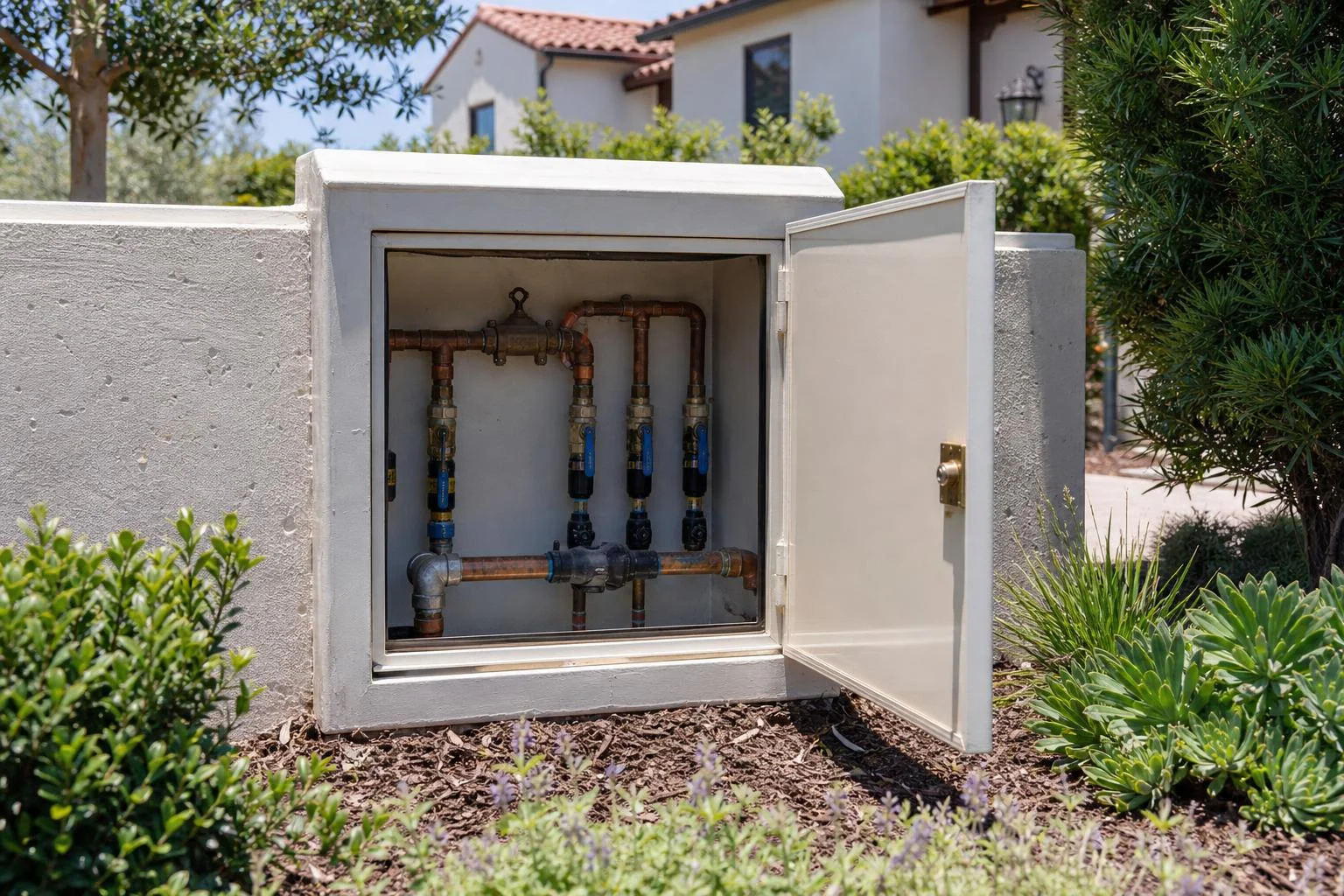


A leaking irrigation backflow assembly is more than an inconvenience—it can waste water, damage landscaping, and put a property’s water-safety compliance at risk. When a 2-inch device has visible corrosion around its shutoff valves or persistent leakage, prompt backflow preventer replacement is often the most reliable solution. At Dymek’s Freedom Plumbing, we replace failing irrigation backflow devices for residential and commercial properties throughout Orange County, including Laguna Hills, Irvine, Anaheim Hills, and nearby communities. This guide explains what happens during a 2-inch RPZ backflow replacement, why the property water must be temporarily shut off, and why annual certified testing is essential after installation.
When Is 2-Inch Backflow Preventer Replacement Needed?
A backflow preventer protects the potable water supply from contamination caused by backflow. Backflow can occur when pressure in an irrigation system, pool fill line, or other non-potable water source exceeds the pressure in the public water supply. The backflow device is designed to stop water from flowing in the wrong direction.
For irrigation systems, a Reduced Pressure Zone (RPZ) backflow preventer is commonly installed where a higher level of protection is required. Some property owners refer to this as a reverse pressure zone device, but the industry term is RPZ, or reduced pressure zone assembly.
Signs a 2-inch irrigation backflow assembly may need replacement include:
- Water leaking from the body, relief valve, fittings, or shutoff valves
- Heavy corrosion, mineral buildup, or deteriorated valve handles
- Repeated failures during annual backflow testing
- Low irrigation pressure or inconsistent sprinkler performance
- Inability to fully shut off water at the assembly
- Cracked components following age, wear, or a Southern California cold-weather event
While certain parts can sometimes be repaired, extensive corrosion and leaking shutoff valves can make a complete backflow preventer replacement the safer long-term option. Replacing the device and its dedicated shutoff valves helps restore dependable operation and gives the irrigation system a clean, serviceable connection point.
Why the Water Must Be Shut Off During Installation
Replacing a 2-inch RPZ assembly requires disconnecting the existing device from the property’s water piping. Because the irrigation backflow device is connected to the water supply, the water must be shut off to the entire property for the duration of the installation. This is necessary to safely remove the old assembly, install the replacement unit, replace the shutoff valves, and make secure connections without uncontrolled water flow.
For homeowners, this means planning around a temporary interruption to faucets, toilets, water heaters, appliances, and irrigation. For commercial properties, such as retail centers, offices, HOAs, and multifamily buildings in Orange County, scheduling is especially important to reduce disruption to tenants and daily operations.
Before work begins, Freedom Plumbing recommends that property owners:
- Schedule the installation during a low-use period whenever possible.
- Notify tenants, employees, or residents of the temporary water shutdown.
- Pause irrigation controller schedules for the day of service.
- Complete water-dependent tasks, such as laundry or food preparation, before the scheduled shutoff.
- Provide clear access to the backflow enclosure, landscaping area, or mechanical room.
Our plumbers work efficiently to minimize downtime while prioritizing proper installation. A rushed installation can lead to leaks, poor valve access, or compliance issues, so every connection should be made carefully and checked before the water supply is returned to service.
Our RPZ Backflow Device Installation Process
Dymek’s Freedom Plumbing follows a methodical process for a 2-inch irrigation backflow replacement. The goal is to remove the leaking, corroded unit and install a compatible RPZ assembly that protects the property’s water supply and supports future testing and maintenance.
1. Evaluate the Existing Irrigation Backflow Assembly
We inspect the existing 2-inch device, surrounding piping, shutoff valves, and available clearance. This helps confirm the replacement configuration and identify any related concerns, such as deteriorated pipe, damaged fittings, or poor access for a certified backflow tester.
2. Shut Off the Property Water Supply
The main water supply is shut off before the old assembly is disconnected. The line is depressurized to help prevent water release during removal. This step protects the property and allows the installation to proceed safely.
3. Remove the Old Device and Corroded Shutoff Valves
The failing RPZ device and its compromised shutoff valves are removed. Corrosion can weaken metal components over time, particularly in coastal and inland Southern California areas where moisture, mineral content, irrigation overspray, and outdoor exposure can accelerate deterioration.
4. Install the New 2-Inch RPZ Backflow Preventer
We install a new 2-inch RPZ backflow device of the same required type along with new shutoff valves for the assembly. Correct orientation, accessible valve placement, and secure piping connections are critical. The device must be installed in a manner that allows future inspection, maintenance, and annual testing.
5. Restore Water and Check for Leaks
Once the installation is complete, water is restored gradually. Our team checks all new connections, valves, and the device body for visible leaks. We also verify that the shutoff valves operate correctly and that the assembly is functioning as intended before completing the service visit.
Annual Certified Backflow Testing and Compliance
Installing a new device is an important first step, but it does not replace the need for formal compliance testing. After installation, the unit needs to be tested by a certified backflow tester for annual compliance requirements. Many water agencies require backflow assemblies to be tested at installation and then annually to verify that the internal check valves and relief valve are protecting the potable water system.
A visual inspection alone cannot confirm that an RPZ device will perform correctly under changing pressure conditions. Certified testing uses specialized gauges and procedures to evaluate the assembly’s internal performance. If the device passes, the results can be submitted according to the local water agency’s requirements. If it fails, repairs or adjustments may be needed before compliance is achieved.
Property owners should keep testing documentation in a safe place and set an annual reminder. Missing a backflow test deadline can lead to notices from the water provider, avoidable service delays, or potential compliance concerns. This is especially important for HOAs, commercial properties, medical offices, restaurants, and multifamily properties in Irvine, Laguna Hills, Anaheim Hills, and throughout Orange County.
Protect Your Irrigation System With Professional Backflow Service
Backflow assemblies are a vital safeguard, not a plumbing component to ignore until a major leak occurs. Regular visual checks can help identify concerns early. Look for standing water in the enclosure, green staining on metal parts, rust or corrosion, dripping valves, and damage caused by landscaping equipment. Avoid covering the device with mulch or dense plants, since easy access is important for service and annual testing.
Professional installation also matters because an incorrectly installed device can create leaks, restrict irrigation flow, or fail inspection. Choosing a qualified local plumber for backflow preventer replacement helps ensure the new 2-inch RPZ assembly, shutoff valves, and connected piping are installed with long-term reliability in mind.
Conclusion: A leaking, corroded 2-inch irrigation backflow device should be addressed before it causes further water loss, property damage, or compliance issues. Replacing the old RPZ assembly and worn shutoff valves requires a temporary property-wide water shutdown, but it provides a dependable foundation for safe irrigation operation. After installation, leak checks and functional verification are essential, followed by testing from a certified backflow tester for annual compliance. If your Orange County property has a leaking or aging backflow assembly, contact Dymek’s Freedom Plumbing today to schedule professional inspection, replacement, and plumbing support. We serve homeowners and businesses across Laguna Hills, Irvine, Anaheim Hills, and surrounding Southern California communities.