

When a property owner reports that copper water lines were capped in the attic, a targeted attic leak detection and visual inspection can be essential for identifying the source, scope, and timeline of water intrusion. Hidden plumbing above the ceiling can leak slowly for weeks before staining, insulation damage, or microbial growth becomes visible inside the home. For homeowners, property managers, and insurance-related losses in Orange County, a thorough attic assessment provides clear documentation of what is present, what is damaged, and what should be repaired. Freedom Plumbing helps residential and commercial customers in Laguna Hills, Irvine, Anaheim Hills, and nearby Southern California communities inspect suspected attic plumbing issues with careful testing, detailed photos, and practical repair recommendations.
Why Attic Leak Detection Matters for Capped Copper Lines
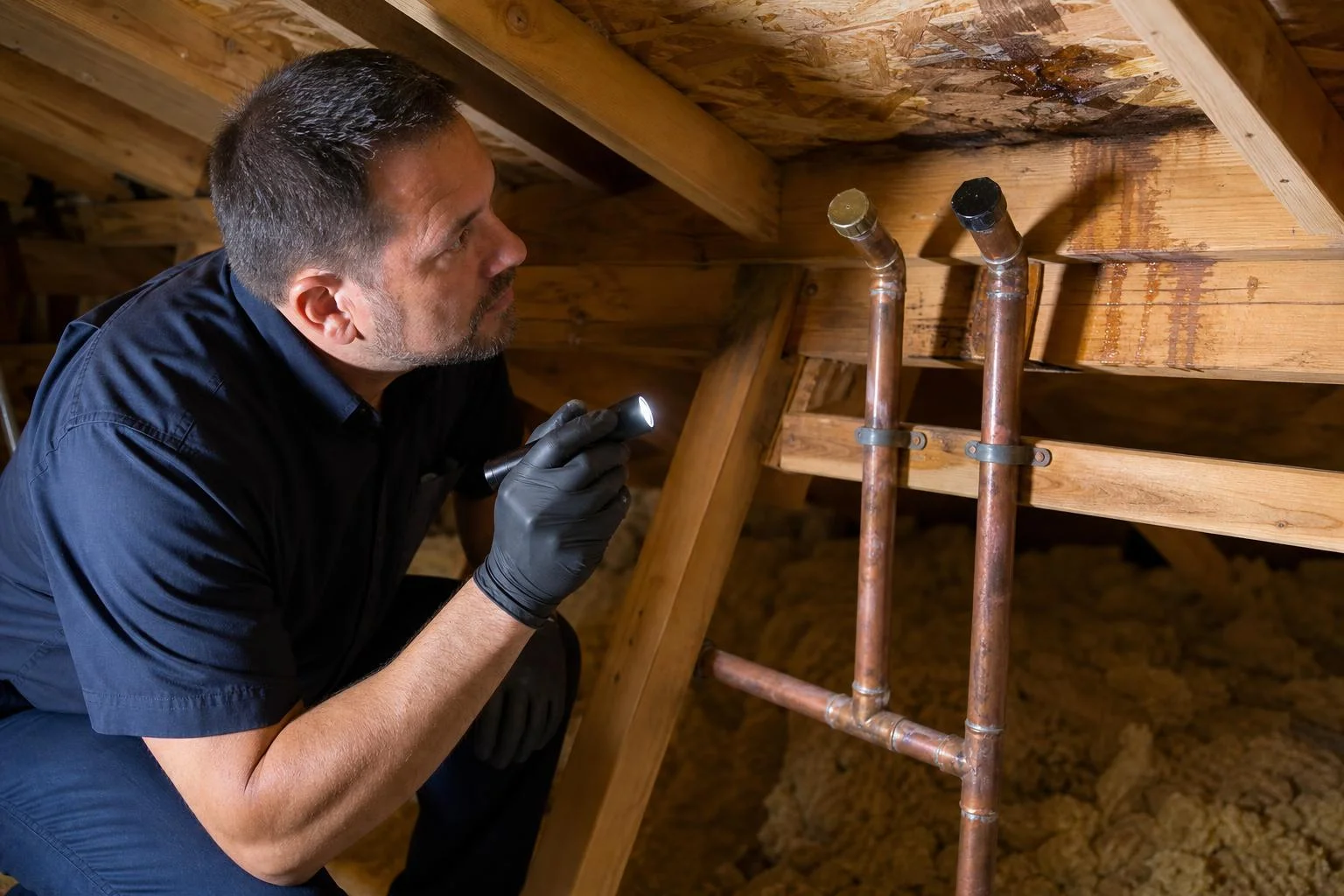
Copper piping has long been used in Southern California homes because it is durable and dependable. However, older copper lines can develop pinhole leaks, corrosion, failed fittings, or damage at previous modification points. If a line was abandoned or rerouted during a remodel, capped sections may remain in the attic. Those caps, solder joints, or nearby active lines should be visually inspected to determine whether they are dry, properly secured, and disconnected from the active water system as intended.
Professional attic leak detection focuses on more than finding an active drip. The goal is to identify evidence that helps explain a reported loss, including:
- Active moisture on copper pipes, fittings, caps, valves, or surrounding framing
- Water staining on roof sheathing, rafters, ceiling drywall, or insulation
- Corrosion, green patina, mineral deposits, or oxidation around copper connections
- Wet, compressed, displaced, or deteriorated attic insulation
- Previous repairs, uncapped stubs, improperly supported piping, or recent plumbing alterations
- Signs that moisture may be coming from a roof penetration, HVAC condensation line, or plumbing line instead of another source
The U.S. Environmental Protection Agency notes that household leaks can waste nearly 10,000 gallons of water per year in an average home. Even when a leak has stopped before an inspection, remaining staining and moisture patterns can help distinguish a plumbing concern from roof-related water intrusion or condensation.
What a Visual Attic Inspection Should Document
An attic inspection for a reported water loss should be systematic and photo-documented. At Freedom Plumbing, our technicians begin by safely accessing the attic and evaluating visible plumbing, structural surfaces, insulation, and areas directly above the reported interior damage. Because attic spaces can be hot, cramped, and difficult to navigate in Orange County homes, proper access and careful movement are important to avoid disturbing insulation or causing additional ceiling damage.
Photos of Copper Lines and Caps
Clear photographs should show both the overall location and close-up condition of any suspected copper piping. This includes capped copper lines, branch lines, joints, fittings, valves, and transitions to other pipe materials. Wide-angle photos establish where the pipe is located in relation to framing and the affected room below. Close-up images can capture corrosion, discoloration, mineral buildup, moisture droplets, or evidence of prior repairs.
Photos of Water Damage in the Attic
Water damage in an attic may appear as darkened wood, yellow or brown staining, swollen drywall backing, rusted fasteners, damp insulation, or white mineral residue. Documenting both damaged and unaffected surrounding materials helps create a more complete picture of the area. Photos should also capture any apparent pathway water may have followed, such as a pipe run, a roof deck seam, or a low point in the attic framing.
Moisture and Pressure Testing When Appropriate
A visual inspection is often the first step, but it may not be enough to confirm whether a plumbing line is actively leaking. Depending on site conditions, a plumber may recommend moisture-meter readings, water-pressure testing, isolation testing, or leak detection equipment. These methods can help determine whether an active supply-line leak exists without unnecessary drywall removal.
It is important to note that a dry pipe during the visit does not automatically eliminate a prior intermittent leak. Some leaks occur only when fixtures are in use, when pressure changes, or when hot-water lines expand. A qualified plumbing inspection considers the condition of the materials, visible evidence, the property owner’s observations, and test results together.
Common Sources of Attic Water Damage in Orange County
Attic water damage does not always originate from a failed pipe. In coastal and inland Orange County, homes may experience moisture concerns from seasonal rain, aging roofs, air-conditioning systems, plumbing failures, and condensation. Identifying the correct source is critical before completing repairs.
- Leaking copper supply lines: Pinhole leaks and failed soldered joints can release pressurized water into insulation and ceiling cavities.
- Abandoned or capped plumbing: Old pipe sections may have deteriorated caps or may not have been properly disconnected during a renovation.
- Roof leaks: Damaged flashing, worn underlayment, cracked tiles, and roof penetrations can allow rainwater into the attic.
- HVAC condensate problems: A clogged or disconnected condensate drain can create water damage near attic-installed air handlers.
- Condensation: Poor ventilation, uninsulated cold-water pipes, and temperature swings can create moisture that resembles a leak.
Homes in Anaheim Hills and other warmer inland areas often experience intense attic temperatures, which can stress plumbing materials and HVAC equipment. In Laguna Hills, Irvine, and surrounding communities, older homes and remodels may also contain a combination of original copper piping and newer replacement materials. This makes a professional visual assessment especially valuable when the source is unclear.
Steps to Take Before a Plumbing Attic Inspection
Taking a few practical steps can help protect the property and support an efficient inspection. If there is an active leak or visible ceiling sagging, prioritize safety and water control first.
- Shut off water if a plumbing leak is suspected. Turn off the home’s main water supply if water is actively entering the ceiling or attic. If you are unsure where the shutoff is located, call a plumber for guidance.
- Do not enter a compromised attic. Wet insulation, damaged framing, exposed wiring, and weakened ceiling drywall can create hazards.
- Move belongings away from affected ceilings. Protect furniture, flooring, electronics, and valuables below the suspected leak area.
- Record what you observe. Note when the staining was first seen, whether it worsens after rain or fixture use, and whether the water appears clean, rusty, or discolored.
- Avoid covering or painting stains before documentation. Photos and visible conditions may assist with repair planning and insurance communication.
- Schedule professional leak detection. A licensed plumber can inspect accessible piping, identify needed tests, and recommend the appropriate repair.
Frequently Asked Questions About Attic Leak Detection
Can a plumber confirm whether capped copper lines are in the attic?
Yes. A visual attic inspection can confirm whether accessible copper lines are present, whether they are capped, and whether they appear connected to active plumbing. Photos can document the lines, cap condition, surrounding materials, and any visible signs of moisture or corrosion.
What does attic water damage from a plumbing leak look like?
Common signs include damp or matted insulation, dark water stains on wood, rusted nails or metal straps, mineral deposits around pipes, warped drywall, and staining on the ceiling below. An active supply-line leak may also produce dripping, hissing, or a sudden drop in water pressure.
Is an attic leak always caused by the roof?
No. Attic moisture can come from plumbing lines, failed caps, HVAC condensate, roof penetrations, or condensation. A professional inspection evaluates the location and pattern of moisture before recommending repairs.
For reliable attic leak detection, it is best to address both the immediate plumbing concern and the condition of affected materials. Prompt action can limit water damage, reduce the chance of secondary issues, and help ensure repair decisions are based on visible evidence rather than assumptions.
Schedule Attic Leak Detection With Freedom Plumbing
Suspected copper lines, water staining, or a possible attic leak should never be ignored. A careful inspection can confirm accessible capped lines, document visible attic conditions with photos, and identify whether the next step is plumbing repair, additional leak testing, or coordination with another trade. Freedom Plumbing provides responsive rooter, drain, pipe repair, leak detection, and general plumbing services throughout Orange County. If your home or commercial property in Laguna Hills, Irvine, Anaheim Hills, or a nearby Southern California community has signs of attic water damage, contact Dymek’s Freedom Plumbing today. Our experienced team will help you understand what is visible, protect your plumbing system, and move forward with a clear repair plan.