

A water heater expansion tank replacement is more than a simple swap of one small component. In Orange County homes, a closed plumbing system, high incoming water pressure, and mineral-rich water can put extra stress on a water heater, valves, and pipe connections. A failing expansion tank may contribute to pressure-relief valve dripping, pressure swings, or premature water heater wear. If the project also includes securing the water heater to the wall, installing a gas sediment trap, and adding an aquastat for a compatible hydronic system, proper sizing, placement, and safety practices matter. This guide explains what each component does, warning signs to watch for, and why professional installation protects homes and businesses in Laguna Hills, Irvine, Anaheim Hills, and nearby communities.
When Is Water Heater Expansion Tank Replacement Needed?
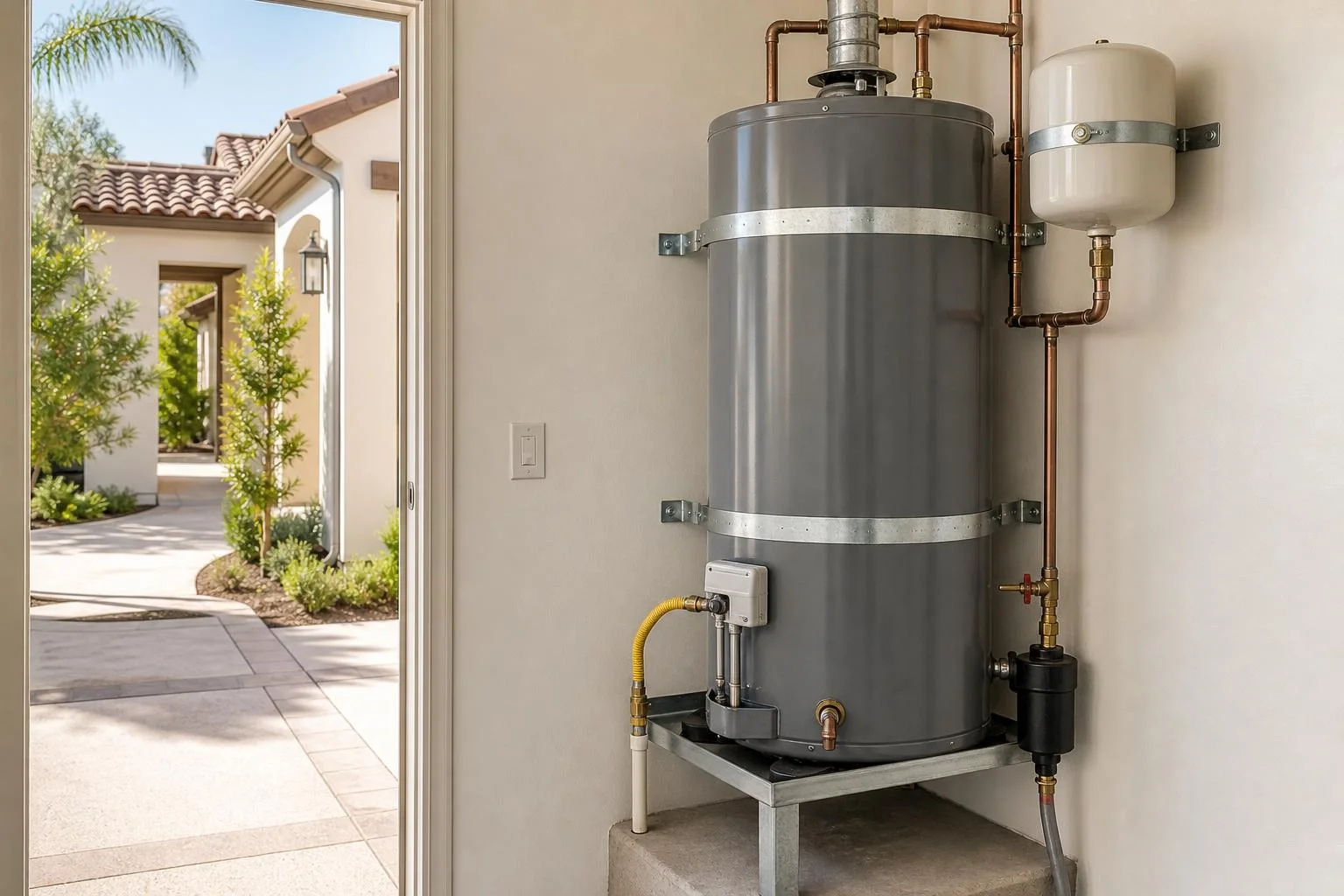
An expansion tank is a small, pressurized vessel installed on the cold-water supply line serving a water heater. Its internal air bladder cushions the normal expansion of water as it heats. This is especially important when a check valve, pressure-reducing valve, backflow device, or similar fitting creates a closed water system.
A water heater expansion tank replacement may be appropriate when a plumber finds that the bladder has failed, the tank is corroded, or the tank is no longer correctly sized for the home’s water pressure and heater capacity. Common symptoms include:
- Water periodically dripping from the temperature-and-pressure relief valve
- Noticeable pressure changes at faucets or appliances
- Rust, corrosion, or water leakage around the expansion tank connection
- A tank that feels unusually heavy because it has become waterlogged
- Recurring plumbing leaks or fixture problems linked to excessive pressure
Do not assume every relief-valve drip means the expansion tank is bad. The water heater may be overheating, the relief valve itself may have failed, or incoming water pressure may be too high. A licensed Orange County plumber can test static pressure, inspect the relief valve discharge arrangement, and verify whether thermal expansion is the underlying issue.
Expansion Tank Installation and Water Heater Strapping
Correct support is essential. An expansion tank should never be left hanging unsupported from a water line. Once filled, it becomes substantially heavier, placing stress on fittings and increasing the chance of a leak. Depending on its size, orientation, and manufacturer requirements, the tank may need a listed mounting bracket or other independent support. Freedom Plumbing selects and installs the appropriate support method rather than relying on the pipe alone.
California’s seismic conditions also make water heater strapping a major safety issue. Water heaters in Orange County, including properties in Anaheim Hills and Laguna Hills, generally need to be restrained against earthquake movement. Proper seismic bracing helps prevent a heater from shifting, damaging gas or water connections, or toppling during a seismic event.
What proper water heater strapping should accomplish
- Secure the water heater to a structurally sound wall location, not only drywall.
- Use straps and hardware suitable for the heater size and the wall construction.
- Position upper and lower restraints in accordance with applicable California and local requirements.
- Allow safe access to controls, service panels, shutoff valves, and the temperature-and-pressure relief valve.
- Avoid pinching, stressing, or improperly routing water, gas, or vent connections.
Many older installations have loose straps, screws driven only into drywall, or makeshift restraints that are not designed for seismic movement. A professional inspection can identify these deficiencies during a water heater repair, replacement, or expansion tank service visit.
Gas Sediment Trap Installation: A Key Safety Detail
A gas sediment trap, sometimes called a drip leg, is a short section of approved piping installed at the gas connection to collect debris and moisture that could otherwise enter a gas control valve. It is not the same as a water drip pan beneath a water heater. Its purpose is to protect the gas appliance’s sensitive components from contaminants in the gas line.
Gas piping work should always be performed by a qualified professional. The placement and configuration of a sediment trap must meet the appliance manufacturer’s instructions and the locally adopted fuel-gas code. An incorrectly installed fitting can restrict gas flow, create a leak risk, or fail an inspection.
Why Orange County property owners should not skip this step
When a new gas water heater is installed or an existing connection is modified, the gas line should be evaluated as a complete system. That includes the accessible shutoff valve, approved connector where applicable, sediment trap, leak testing, combustion air, venting, and earthquake-rated gas shutoff considerations. For commercial properties, kitchens, multifamily buildings, and older homes, existing gas piping may need closer review before a new appliance is connected.
Freedom Plumbing’s technicians take a safety-first approach to gas water heater service. If an outdated connection or missing sediment trap is discovered, we explain the concern clearly and recommend a code-conscious repair path.
When an Aquastat Is the Right Water Temperature Control
An aquastat is a temperature-sensing control commonly used in hydronic heating systems, boilers, indirect water heaters, recirculation applications, and certain commercial systems. It monitors water temperature and signals equipment to turn on or off within a selected range. Although homeowners sometimes use “aquastat” to describe any water temperature control, it is not a universal add-on for every standard residential gas water heater.
For a conventional tank-style gas water heater, the appliance’s factory-installed gas control valve and thermostat usually manage water temperature. Installing an aftermarket aquastat without confirming system compatibility can create operational and safety problems. For a boiler-fed indirect tank, radiant heating system, or commercial hot-water application, an aquastat may be a critical component that needs precise installation and calibration.
Benefits of a correctly installed aquastat
- More consistent temperature control for compatible hydronic equipment
- Protection against short-cycling and unnecessary equipment operation
- Better coordination between a boiler, circulator, indirect tank, or recirculation system
- Improved troubleshooting when water temperatures are inconsistent
Water temperature settings deserve careful attention. The U.S. Consumer Product Safety Commission has long advised that 120°F is a safer setting for many households to reduce scalding risk, while some systems require different temperatures for operational or sanitation reasons. A plumbing professional can help balance comfort, safety, system design, and manufacturer guidance.
Professional Installation Protects Your Water Heater Investment
A water heater expansion tank replacement often reveals related issues that should be addressed at the same time: high pressure, aging shutoff valves, corroded flex lines, missing seismic straps, sediment accumulation, or gas connection concerns. Addressing these items in one coordinated service visit can help prevent repeat leaks and avoidable water heater downtime.
For homeowners and business owners in Orange County, regular plumbing maintenance is especially valuable. Southern California water commonly contains minerals that form scale inside water heaters and on valves. Flushing a tank water heater as recommended by its manufacturer, checking for leaks, and scheduling prompt repairs can improve reliability. If the unit is older, produces rusty water, makes rumbling sounds, or cannot maintain temperature, it may be time to discuss repair versus replacement.
Freedom Plumbing provides professional water heater service, pipe repair, drain cleaning, and rooter solutions throughout Orange County. Our team can evaluate the entire installation, explain practical options, and complete the work with attention to safety and long-term performance.
Schedule Water Heater Safety Service in Orange County
A failed expansion tank, unsecured water heater, missing gas sediment trap, or improperly selected aquastat should not be treated as a minor DIY project. Each item affects water pressure, earthquake safety, gas appliance operation, or temperature control. The best solution starts with an on-site inspection that confirms the equipment type, local requirements, and the condition of existing plumbing connections.
Freedom Plumbing is the trusted local choice for water heater expansion tank replacement, seismic water heater strapping, gas line safety improvements, and compatible aquastat installation in Orange County. Whether you are in Irvine, Laguna Hills, Anaheim Hills, or a surrounding Southern California community, contact Dymek’s Freedom Plumbing today to schedule expert water heater service and protect your property from leaks, pressure problems, and preventable equipment failures.