

When the washing machine drains and water rises in the kitchen sink, you may need to snake a laundry drain—but the clog is often deeper than the laundry hookup itself. In many Orange County homes, the laundry standpipe and kitchen sink connect to a shared branch drain before reaching the main sewer line. Lint, detergent residue, cooking grease, and food debris can slowly restrict that pipe until a high-volume wash cycle forces wastewater back toward the kitchen. Knowing what the backup means can help you prevent water damage and avoid making the blockage worse. Below, Freedom Plumbing explains why this happens, when a drain snake may help, and when to call a professional rooter technician.
Why a Laundry Drain Backs Up Into the Kitchen
A laundry-to-kitchen backup usually points to a blockage in the shared drain line downstream from both fixtures. A washing machine can discharge 15 to 25 gallons of water quickly, creating more pressure than a partially clogged pipe can handle. Instead of moving toward the sewer, the water seeks the easiest available exit—often the kitchen sink, garbage disposal, or dishwasher connection.
Common causes include:
- Lint and soap buildup: Fabric fibers combine with detergent, softener, and minerals to form a sticky restriction inside drain pipes.
- Grease in kitchen lines: Grease may look liquid when poured down a sink, but it cools and solidifies inside the pipe, trapping food particles and lint.
- Foreign objects: Paper towels, wipes, small utensils, and excessive food waste can obstruct a shared branch line.
- Root intrusion: Older homes in Laguna Hills, Anaheim Hills, and nearby communities can develop cracked sewer pipes that attract tree roots.
- Pipe damage or improper slope: Settling soil, corrosion, or an incorrectly pitched drain can allow recurring buildup in the same location.
If only the laundry drain is slow, the blockage may be near the standpipe or P-trap. If the kitchen sink bubbles, fills, or overflows when the washer drains, the clog is more likely in the shared line. That distinction matters because snaking from the wrong access point may not fully clear the obstruction.
How to Snake a Laundry Drain Safely
To snake a laundry drain safely, first stop the washer and avoid running the dishwasher, kitchen faucet, or garbage disposal. Continued water use can overflow the sink or standpipe. Place towels and a shallow container nearby, since opening a cleanout or disconnecting a hose may release standing water.
Start With the Right Access Point
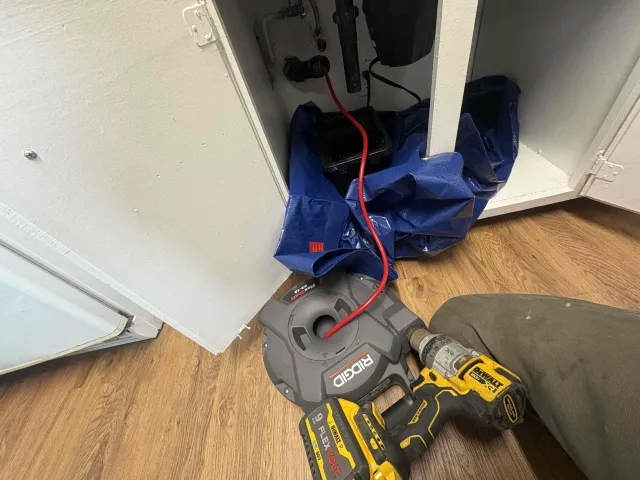
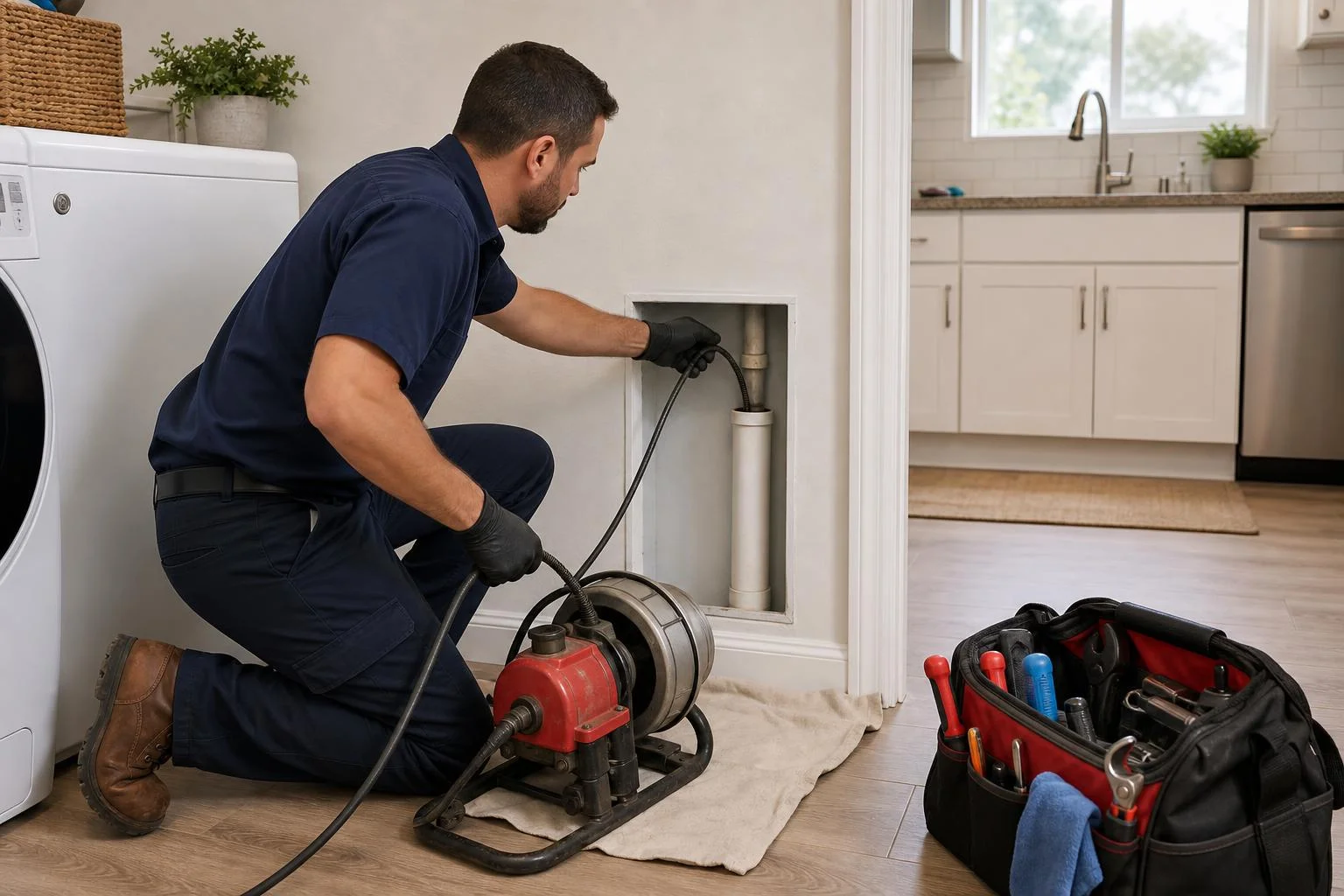
For a minor laundry clog, remove the washing machine drain hose from the standpipe and inspect the opening for visible lint. A hand-crank drain auger may reach a nearby obstruction. Feed the cable slowly into the standpipe, turning the handle only as needed. Do not force it. Aggressive twisting can damage older pipes, snag the cable, or push a soft clog farther down the line.
- Turn off the washing machine and unplug it if you need to move it.
- Remove the drain hose carefully and keep it in a bucket.
- Feed a small hand auger into the standpipe until it meets resistance.
- Rotate gently while advancing and retracting the cable.
- Remove debris from the cable, then test with a small amount of water first.
- Run a short rinse cycle only after the kitchen sink drains normally.
A standard hand snake is not always enough for a shared kitchen and laundry blockage. Grease-packed lines, root intrusion, and clogs farther down the branch drain generally require a professional power snake or hydro jetting equipment. Freedom Plumbing can identify the correct cleanout, clear the line thoroughly, and help confirm that wastewater is flowing in the proper direction.
What Not to Do When the Kitchen Sink Is Backing Up
Do not reach for chemical drain cleaners when laundry water is backing up into the kitchen. Caustic products can sit in a blocked pipe, damage certain plumbing materials, create hazardous splashes, and make professional service more dangerous. They also rarely remove the combination of lint, grease, and roots commonly found in a shared drain line.
Avoid these common mistakes:
- Running another wash cycle to “push” the clog through.
- Using the garbage disposal while the sink is full of wastewater.
- Pouring boiling water into a completely backed-up drain.
- Mixing different chemical cleaners or cleaners with vinegar.
- Using an oversized power auger without experience.
- Ignoring sewage odors, multiple fixture backups, or gurgling toilets.
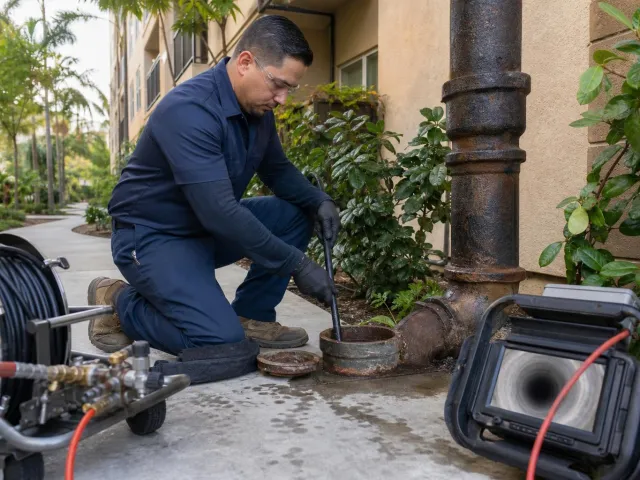
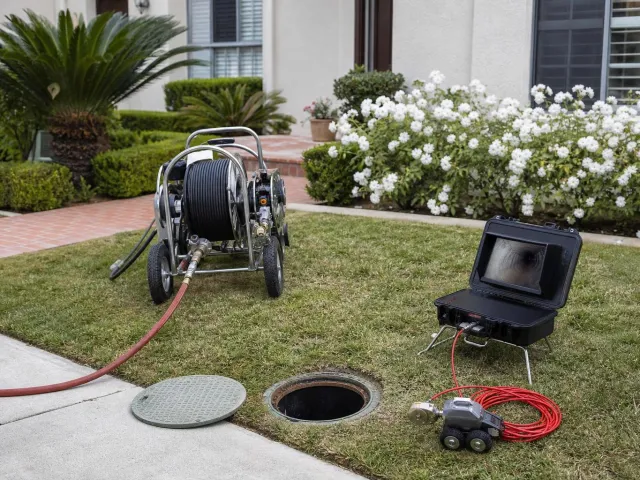
If more than one drain is affected, there may be a main sewer line problem rather than a simple laundry drain clog. A professional camera inspection can locate the blockage and reveal whether roots, scale, a collapsed pipe, or a foreign object is responsible.
Orange County Drain Cleaning for Shared Line Clogs
Southern California plumbing systems face challenges that are easy to overlook. Hard water minerals can contribute to scale inside pipes, while mature landscaping can send roots toward tiny leaks in older sewer lines. In areas such as Irvine, Laguna Hills, Anaheim Hills, and across Orange County, homes with aging drain systems may also have undersized or corroded piping that clogs more easily.
Freedom Plumbing provides targeted drain cleaning and rooter services instead of treating every backup the same way. After locating the likely obstruction, a technician may recommend:
- Professional drain snaking for localized clogs and compact debris.
- Hydro jetting to remove grease, sludge, soap residue, and buildup along pipe walls.
- Sewer camera inspection for recurring backups or suspected root damage.
- Pipe repair or replacement when cracks, offsets, or severe corrosion are causing repeat clogs.
Professional equipment does more than restore temporary flow. It helps clean the pipe more completely and identifies conditions that could lead to another kitchen or laundry backup soon after service.
Prevent Laundry and Kitchen Drain Backups
Simple habits can greatly reduce the chance of a shared-line clog. Use a lint trap on the washing machine discharge hose, especially if you wash towels, fleece, pet bedding, or heavily soiled work clothes. Clean the trap regularly so it does not restrict washer drainage. In the kitchen, scrape plates into the trash or compost bin and collect cooled grease in a disposable container rather than rinsing it into the sink.
For homes with a history of slow drains, recurring odors, or large trees near the sewer route, schedule preventive drain cleaning. Annual or as-needed maintenance is often less disruptive than waiting for a washer discharge to flood the kitchen. Property managers and commercial businesses should also consider routine drain service, since frequent laundry and food-service use can accelerate buildup.
Call Freedom Plumbing for Fast Laundry Drain Service
A kitchen sink that backs up during a wash cycle is a clear warning that the drainage system needs attention. While you may be able to snake a laundry drain when a small, nearby clog is causing the issue, a shared-line backup often needs professional diagnosis and drain cleaning. Stop using water, avoid chemical cleaners, and watch for additional fixture backups that could signal a sewer line problem. Dymek’s Freedom Plumbing serves homeowners and businesses throughout Orange County with dependable rooter service, drain cleaning, camera inspections, and pipe repair. Contact Freedom Plumbing today to clear the blockage, protect your property, and get your kitchen and laundry plumbing flowing properly again.