

A toilet continuously running is more than an annoying sound—it can waste a surprising amount of water and increase your monthly utility bill. In many Orange County homes and businesses, the issue begins inside the tank, where a worn fill valve, leaking flapper, incorrect water level, or failing shutoff valve prevents the toilet from completing its refill cycle. At Dymek’s Freedom Plumbing, we recently resolved this type of problem by installing a new fill valve and replacing the toilet’s angle stop valve. This guide explains why a running toilet happens, what homeowners can safely check, and when professional toilet repair is the most reliable solution.
Why Is My Toilet Continuously Running?
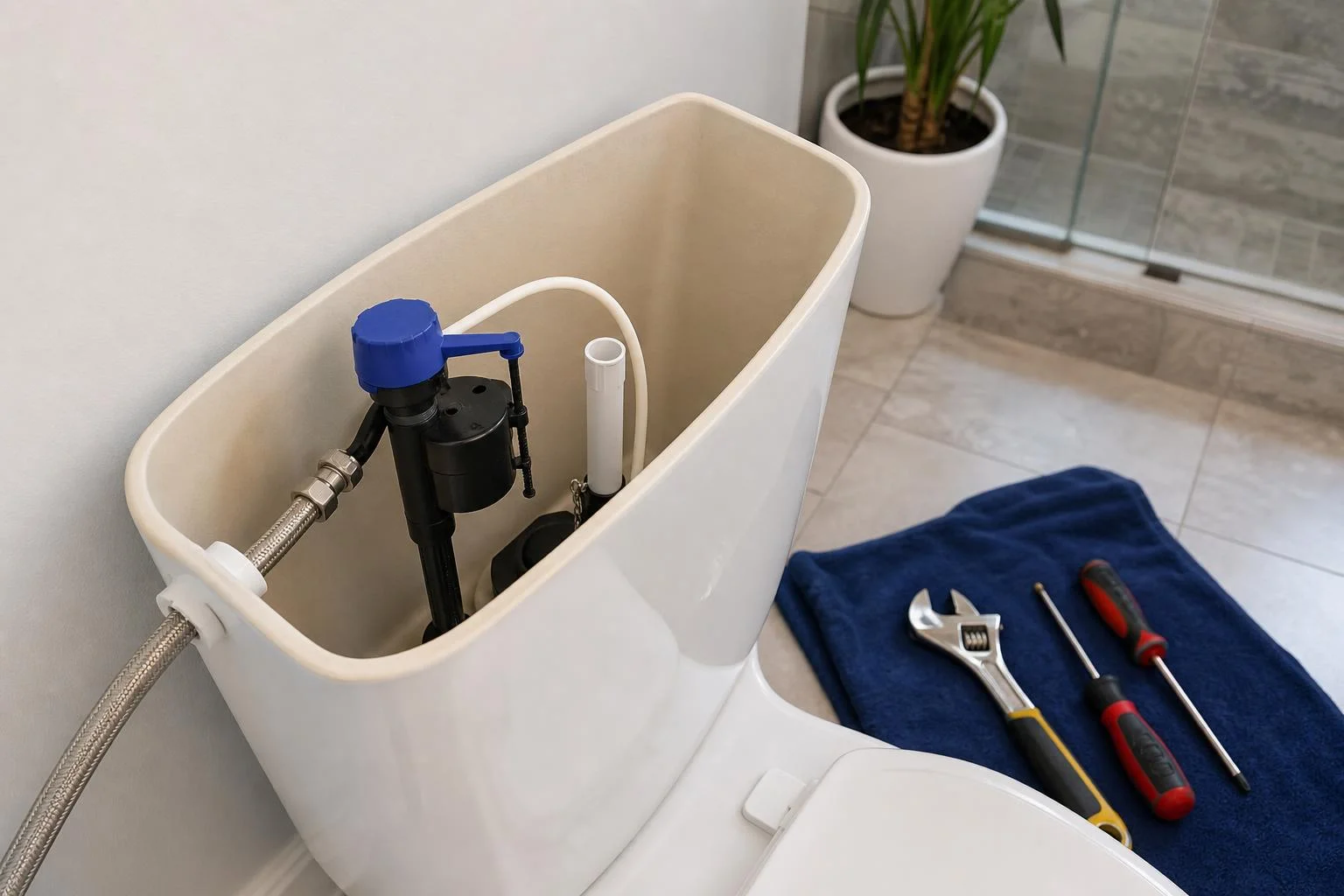
A toilet continuously running usually means water is either entering the tank when it should not or escaping from the tank into the bowl. The fill valve controls incoming water after each flush. Once the tank reaches the correct level, the valve should shut off. If it is worn, incorrectly adjusted, or clogged with mineral buildup, water may keep flowing.
Other common causes of a running toilet include:
- A worn or warped flapper: The rubber flapper at the bottom of the tank may not seal tightly, allowing water to leak slowly into the bowl.
- An improperly adjusted float: A float set too high can cause water to run into the overflow tube.
- A damaged fill valve: Older fill valves can stick, fail to close, or refill the tank inconsistently.
- A faulty flush valve: Cracks or deterioration around the flush valve seat can prevent a watertight seal.
- A leaking angle stop valve: The small shutoff valve at the wall supplies water to the toilet. Corrosion, age, or a seized valve may require replacement.
According to the U.S. Environmental Protection Agency, household leaks can waste nearly 10,000 gallons of water annually, and toilets are a frequent source. Addressing a continuously running toilet promptly helps protect water resources and avoids needless costs.
Fill Valve Repair and Angle Stop Replacement
For many toilet repair calls in Orange County, the fill valve is the primary culprit. A professional plumber begins by inspecting the water level, listening for water movement, and checking whether water is entering the overflow tube. If the fill valve does not shut off correctly, replacement is often more dependable than attempting to repair a worn internal component.
At Freedom Plumbing, a typical repair for this problem may include installing a new, properly adjusted fill valve and changing the angle stop valve that supplies the toilet. Replacing the angle stop is especially valuable when the existing valve is corroded, difficult to turn, dripping, or no longer shuts water off completely. A functional shutoff valve makes future maintenance safer and faster.
Professional installation matters because the new fill valve must be compatible with the toilet tank and set to the manufacturer’s recommended water level. The supply line and angle stop also need secure connections to prevent hidden leaks behind the toilet.
What a Proper Toilet Fill Valve Installation Includes
- Shutting off the water supply at the angle stop valve.
- Draining the tank and removing the failing fill valve.
- Inspecting the flapper, overflow tube, and flush valve for related wear.
- Installing and adjusting the new fill valve to the correct water level.
- Replacing a defective angle stop valve and reconnecting the supply line.
- Testing multiple flush cycles for reliable shutoff and leak-free operation.
Simple Checks Before Calling for Toilet Repair
Homeowners in Laguna Hills, Anaheim Hills, Irvine, and nearby communities can perform a few basic checks before scheduling service. These steps can help identify the likely issue, but avoid forcing old shutoff valves or overtightening plastic tank components, as both can cause additional damage.
- Listen for the refill pattern: If the toilet refills every few minutes without being flushed, the flapper may be leaking.
- Check the overflow tube: Remove the tank lid. If water is flowing into the vertical overflow tube, the fill valve or float adjustment is likely the issue.
- Try a dye test: Add a few drops of food coloring to the tank and wait about 15 minutes without flushing. Color appearing in the bowl points to a flapper or flush valve leak.
- Inspect around the base and supply connection: Moisture around the angle stop, supply line, or toilet base should be evaluated quickly.
A small adjustment may occasionally stop the problem, but recurring running water generally indicates a part that is reaching the end of its service life. Replacing the failing component is usually the better long-term value.
Southern California Plumbing Conditions That Affect Toilets
Hard water is a common plumbing challenge across Southern California. Mineral deposits can build up inside fill valves, restrict moving parts, and interfere with proper shutoff. Homes with older plumbing systems in established Orange County neighborhoods may also have aging angle stops, supply lines, and toilet components that have not been replaced in many years.
Commercial restrooms face added wear because of high daily use. Restaurants, offices, retail properties, and multi-unit buildings need fast service when a toilet continuously running affects water consumption or disrupts customers and employees. Prompt plumbing maintenance can prevent a minor valve issue from becoming an emergency leak or water-damage concern.
When to Call an Orange County Plumber
Call a licensed plumbing professional if your toilet keeps running after a flapper replacement, if the shutoff valve will not turn, or if you notice water leaking outside the tank. You should also seek help when multiple toilets have low pressure or refill problems, since this may indicate a broader supply-line issue. Dymek’s Freedom Plumbing provides dependable residential and commercial plumbing services, including toilet repair, drain cleaning, rooter service, pipe repair, and water heater work throughout Orange County.
Stop Water Waste With Professional Running Toilet Repair
A toilet continuously running should never be ignored. While a worn flapper can sometimes be a quick fix, a failing fill valve, incorrect tank adjustment, or deteriorated angle stop often requires a more complete repair. Installing a new fill valve and replacing the toilet’s angle stop valve can restore dependable operation, stop wasted water, and make future shutoffs easier.
If your toilet will not stop refilling in Orange County, Laguna Hills, Irvine, Anaheim Hills, or surrounding Southern California communities, contact Dymek’s Freedom Plumbing. Our experienced team can diagnose the source of the problem, recommend the right repair, and complete the work with care. Call today to schedule professional toilet repair and get your plumbing system running efficiently again.